
Planning for What’s Next: Insights from HPM’s Education Summit Series
Education leaders across the Southeast explore enrollment trends, capital planning, project delivery, and facility strategy during HPM’s Education Summit Series. Discover key insights shaping the future of K-12 facilities.
As school districts across the Southeast navigate evolving demographics, shifting enrollment patterns, funding challenges, and increasing expectations, the need for strategic planning has never been greater.
For many education leaders, those challenges don’t exist in isolation. They arrive all at once, competing for time, attention, and resources.
That’s what made the conversations at HPM’s 2026 Education Summit Series so valuable.
Bringing together superintendents, facilities professionals, and industry experts, the summit created an opportunity for leaders to step away from day-to-day demands, exchange ideas with peers, and explore practical solutions to the challenges shaping K-12 education today. While specific challenges vary from district to district, attendees quickly discovered they have more in common than they may realize.
“One of the things I hope participants take away is the understanding that they’re not alone,” said Tracy Richter, HPM Vice President and K-12 National Practice Leader in Planning. “The relationships that come out of these events are incredibly meaningful because you’re connecting with people facing many of the same opportunities and challenges every day.”
Understanding a Changing Landscape
A major focus of this year’s discussions centered on how changing demographics are reshaping facility planning.
Richter’s presentation explored current and projected trends in enrollment, population growth, birth rates, housing patterns, and school choice, helping attendees better understand how these factors may influence future facility needs.
Just a decade ago, many districts were focused primarily on accommodating growth. Today, the conversation is often more nuanced. School leaders must evaluate changing
enrollment patterns while balancing the long-term stewardship of district resources, evolving community expectations, and the financial realities of capital programs.
The result is a growing need for strategic planning rooted in both data and adaptability.
“We’ll always continue talking about planning and how districts can anticipate what’s coming next,” Richter said. “The questions may evolve, but the need to prepare for the future remains constant.”
Throughout the summit, conversations also addressed the practical realities districts face every day, from effectively communicating with their communities to navigating capital planning requirements, funding considerations, and regulatory changes. Together, these discussions reinforced a shared understanding: successful planning doesn’t just respond to change. It anticipates it.
Making Informed Decisions and Managing Risk
Planning is only one piece of the puzzle.
As capital programs move from concept to execution, school leaders must also navigate complex decisions related to project delivery, contract management, risk allocation, change orders, and financial oversight.
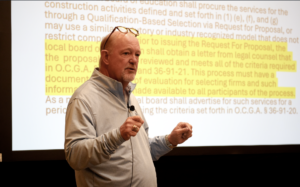
Those topics were explored during sessions led by HPM’s Audit & Advisory Group, where attendees discussed practical approaches to reducing risk while creating fair and transparent project environments.
According to HPM Principal Jake Ortego, successful outcomes often begin with a willingness to challenge assumptions.
“One of the biggest issues we see is getting hung up on what’s considered normal in the industry,” Ortego explained. “Part of our role is helping owners understand all of the options available to them so they can make informed decisions.”
Rather than accepting conventional wisdom at face value, attendees were encouraged to explore alternative approaches, ask questions, and better understand how decisions made early in a project can impact cost, schedule, and outcomes down the road.
Throughout the discussion, one message remained clear: informed decisions lead to stronger projects.
For Ortego, that means creating relationships built on transparency, clarity, and trust. When project teams better understand one another’s goals and challenges, they are better
positioned to align expectations, reduce risk, and achieve successful outcomes for everyone involved.
The Value of Shared Experience and Building a Network
While the educational sessions delivered valuable technical insight, many attendees pointed to another benefit that may be just as important: the opportunity to connect with peers.
For superintendents, facilities leaders, and other district executives, opportunities to step back from day-to-day demands and exchange ideas with colleagues are increasingly valuable.
Kevin Maddox, Superintendent of Hoover City Schools, described the experience as both practical and refreshing.
“In my role, you have so many irons in the fire. It was valuable to get away and think through some common challenges.”
Maddox noted that discussions around student population changes, facility planning, and long-range strategies were especially impactful, providing insights he could take back to his district.
“This was an opportunity to bring educators together, people who do similar work and face common challenges,” he said. “I learned a lot and look forward to coming back next year.”
That spirit of collaboration was evident throughout the summit. Conversations extended beyond formal presentations, creating opportunities for participants to share experiences, compare approaches, and learn from one another’s successes and challenges.
While attendees came to gain insights and practical tools, the learning was hardly one-sided. Throughout the discussions, HPM’s subject matter experts gained valuable perspective into the realities district leaders face every day, helping inform the guidance and support they provide long after the summit concludes.
As one attendee shared with Richter, a single session generated six pages of notes, a testament to both the depth of discussion and the practical solutions leaders were eager to bring back to their districts.
Looking Ahead
As educational leaders continue to navigate an increasingly complex landscape, one thing remains true: no district has all the answers.
The value of bringing together diverse perspectives, sharing lessons learned, and exploring new ideas continues to grow. That’s precisely why the HPM Education Summit Series exists.
For HPM, the learning is mutual.
“Our participants help us do our jobs better,” Richter said. “We walk away just as appreciative of the opportunity to learn from them.”
While topics such as demographic trends, capital funding, project delivery, and contract management drew significant discussion, the lasting takeaway was much simpler: education leaders are stronger when they learn together.
Whether sharing challenges, comparing approaches, or exploring new possibilities, attendees left with fresh perspectives, practical ideas, and a renewed understanding that they are not navigating these complexities alone.
And in a time of rapid change, that may be one of the most valuable resources of all.
 Interested in joining the next conversation?
 Interested in joining the next conversation?
The HPM Education Summit Series brings together education leaders, facilities professionals, and subject matter experts to explore the trends, challenges, and opportunities shaping K-12 facilities today. Connect with our team to learn more about upcoming events and future summit opportunities.
Email Iholmes@hpmleadership.com for more information

